
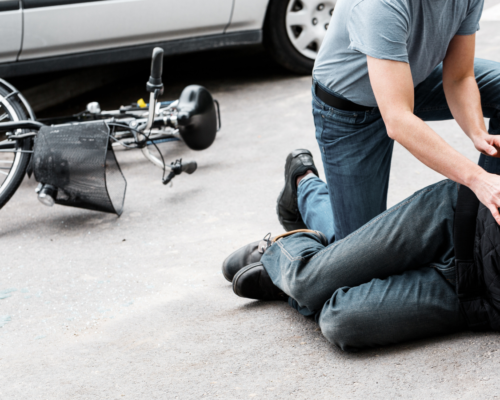
Cycling in Dallas has grown in popularity, and so have the risks to cyclists. One of the most important legal protections for cyclists is the city’s 3-foot bicycle passing rule, a safety measure designed to reduce injuries to cyclists caused by drivers who don’t give them enough room.
Unfortunately, many drivers either misunderstand or ignore this law, leading to preventable accidents and serious injuries. If you or a loved one has been injured in a bicycle crash, understanding how the bicycle passing law works and how it affects liability can play an important role in your case.
Taking action after a bicycle accident can make a meaningful difference in your recovery, and understanding the law is the first step in doing so. Fidel Alex Martinez is a bicycle accident lawyer in Dallas, and at The Law Office of Fidel Alex Martinez, PLLC, we help bicycle accident victims pursue the compensation needed to cover damages such as medical bills, lost wages, and pain and suffering.
What Is the 3-Foot Passing Law in Dallas?
Cyclists have a right to share the road, and drivers must take reasonable actions to avoid endangering them. The Dallas 3-foot bicycle passing law can be found in Texas Transportation Code § 545.053, which governs how motorists must safely pass other road users, including cyclists.
Under this law, drivers must:
- Maintain a minimum distance of at least 3 feet when passing a bicycle
- Provide a greater distance (typically 6 feet) when operating larger vehicles, such as commercial trucks or buses
Why Safe Passing Distance Matters
The reasoning behind the 3-foot law is not arbitrary. Passing too closely can:
- Knock a cyclist off balance due to wind force or contact
- Force a cyclist off the roadway
- Lead to sideswipe collisions
Does the 3-Foot Rule Apply on Narrow Roads
While the 3-foot passing law rule is clear, there are limited situations where strict compliance may not be possible. But drivers are still expected to act reasonably and prioritize safety.
According to the law:
- On narrow roads where a safe passing distance cannot be achieved, a driver should wait until it is safe to pass
- Passing may require temporarily crossing into another lane when permitted
How Violations Establish Negligence
In personal injury claims, proving negligence is essential. When a driver refuses to follow the law, that violation can serve as strong evidence of fault if an accident occurs.
If a driver fails to maintain a safe passing distance that Texas cyclists are entitled to, it can significantly strengthen your claim. A skilled bicycle accident attorney will use evidence of a violation to demonstrate that the driver did not meet their legal duty of care.
How a Bicycle Accident Attorney Can Help
Bicycle accident claims can be complex, and insurance companies are looking for excuses to deny claims or reduce settlement offers. An experienced Dallas personal injury attorney can file a strong claim and negotiate settlement offers with insurance companies. Fidel Alex Martinez is prepared to:
- Investigate the accident
- Gather and preserve evidence
- Work with accident reconstruction experts
- Challenge insurance company tactics
- Advocate for your right to fair compensation
- Take your case to trial if the other side refuses to make a serious offer
Compensation Available for Bicycle Accident Victims
The Law Office of Fidel Alex Martinez, PLLC helps injured cyclists pursue compensation for several types of damages, including:
- Medical expenses
- Lost income
- In-home nursing care
- Pain and suffering
- Mobility devices like walkers and wheelchairs
- Home modifications like widened doorways and walk-in bathtubs
Speak With an Experienced Dallas Bicycle Accident Lawyer
Speak with an experienced Dallas bicycle accident lawyer as soon as possible to understand your legal options and protect your claim. If you have been injured in a bicycle accident in Dallas, you deserve clear guidance and strong legal representation.
Fidel Alex Martinez is committed to protecting your rights regardless of your background or immigration status.
Call (972) 639-8170 to schedule a free consultation.
FAQs: Dallas 3-Foot Bicycle Passing Law
What is the Dallas 3-foot bicycle passing law?
The Dallas 3-foot passing law bicycle rule requires motorists to leave at least three feet of space when passing a cyclist. This law is based on Texas Transportation Code § 545.053 and is designed to reduce collisions and protect cyclists on shared roadways.
Does the 3-foot rule apply to all vehicles?
No. While standard passenger vehicles must maintain at least three feet of distance, larger vehicles such as commercial trucks and buses are typically required to provide more space, often around six feet. This helps ensure a safer passing environment, given the size and force of larger vehicles.
What should a driver do if there isn’t enough space to pass safely?
If a driver cannot maintain a safe passing distance, they are expected to slow down and wait until it is safe to pass, even if that means briefly staying behind the cyclist. Attempting to squeeze past without proper clearance can be a violation of the law, and it also increases the risk of an accident.
Can a driver cross into another lane to pass a cyclist?
Yes, when it is safe and legal to do so, a driver may cross into another lane to provide the required distance. This is often necessary to comply with the law, especially on narrower roads.
What happens if a driver violates the 3-foot passing law?
A violation can lead to a traffic citation and may also establish fault in a personal injury claim. If a cyclist is injured, the driver’s failure to follow the law can be used to support claims of negligence.
How can a cyclist prove a driver passed too closely?
Proving a violation can involve:
- Witness statements
- Photos or video footage
- Police reports
- Accident reconstruction
- Dash cam or surveillance video